
By Keith LaGrone · KnotReset
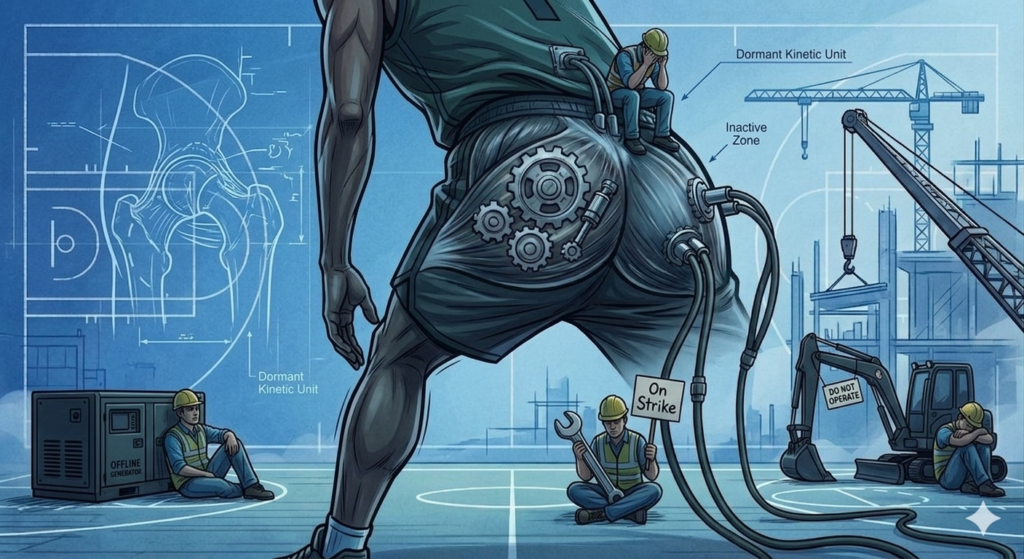
The Hip Neighborhood — dormant, offline, and off the job.
A young athlete came in frustrated. Her ankle had been giving her problems for months. It rolled during practice, ached after games, and never seemed to fully recover no matter what she did. She had been taping it, icing it, resting it. Nothing stuck.
Eventually she went to get it checked out. X-rays, the whole thing. She came back with news that should have been good — no fractures, no breaks, no structural damage. Everything looked fine, but; she was more frustrated leaving than when she went in.
Here’s the thing, the doctor wasn’t wrong, her ankle was fine. That just wasn’t the whole story.
The Neighborhood That Stopped Showing Up
Think of your body like a city. Different regions are different neighborhoods, and each neighborhood has workers with specific jobs.
The Hip Neighborhood runs heavy equipment. The glutes, the deep rotators, the stabilizers — these are the big workers. They control direction, absorb force, and manage power when you cut, land, or change speed. They’re built for that kind of load.
The Ankle Neighborhood is different. It’s a smaller crew. Street-level workers handling balance, fine adjustments, and small corrections. They’re precise and responsive, but they’re not built to handle the heavy work upstairs.
Most days the system runs perfectly. The hips handle the big jobs. The ankles clean up the details.
But when the Hip Neighborhood goes quiet — when those workers stop showing up, go idle, or lose the ability to do their job properly — something happens that most people never see coming.
The work doesn’t disappear. It moves downhill.
Small Crews, Big Problems
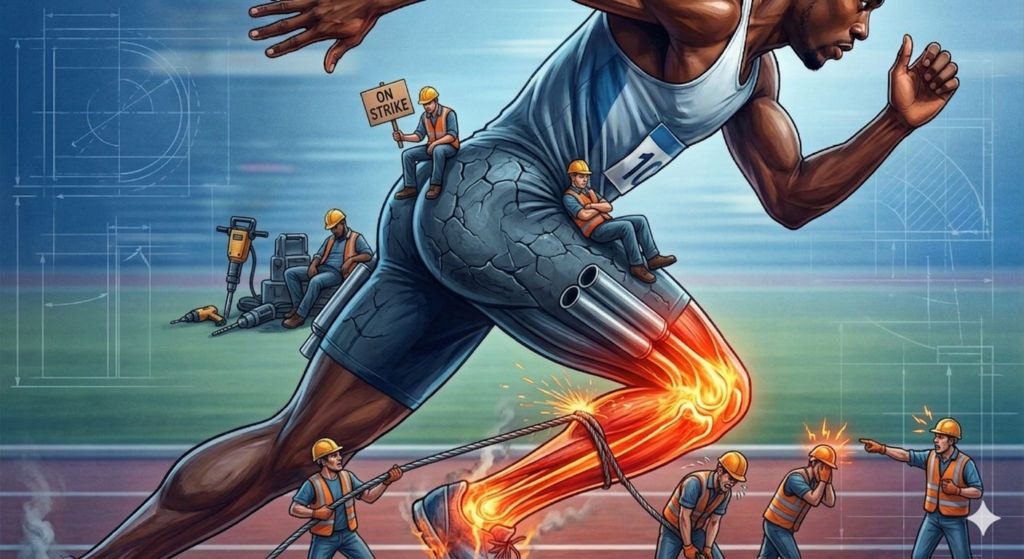
Hip offline. Ankle carrying the full load. The work always moves downhill.
Suddenly the ankle workers are getting assigned jobs they were never trained for. Controlling momentum on a hard cut. Absorbing the force of a landing. Stabilizing the whole body through a direction change.
They try. They always try. But small crews with small tools doing big jobs eventually break down.
That’s when ankles start rolling. That’s when they ache after every practice and never fully heal between games. Not because the ankle is weak. Because it’s been doing two neighborhoods worth of work with half the crew.
Taping it helps temporarily. Strengthening the ankle itself has some value. But if the Hip Neighborhood is still on strike, you’re just putting a better crew in a broken system.
Steph Curry Almost Lost His Career to This
Most people remember Steph Curry as one of the most durable players in the NBA. What they forget is that he almost didn’t have a career at all.
Early on, his ankles were a constant problem. Sprains, instability, repeated injuries that wouldn’t resolve. At one point the damage was significant enough that surgery was seriously considered, and what they found wasn’t encouraging. The tissue had deteriorated to the point where there wasn’t much to work with.
But before they went that route, his training staff looked upstream. What they found was that his hips weren’t firing properly. He wasn’t hinging correctly. The Hip Neighborhood had essentially checked out, and his ankles had been carrying the load for years.
So they went to work on his hip mobility and his hinge pattern. They woke those workers back up.
The ankle problems didn’t just improve. They largely disappeared. And for the better part of a decade since, he’s been considered one of the most physically durable players in the league.
The ankle was never really the problem.
How You Fix It
You don’t just strengthen the ankle crew. You walk uphill and knock on the door of the Hip Neighborhood.
Hip hinges. Glute activation. Deep rotator work. Mobility that isn’t just flexibility — because you can touch your toes and still have hips that don’t move properly when it counts. Flexibility and mobility are not the same thing, and that gap is where a lot of ankle problems live.
Once the hips start doing their job again, the ankle crew can go back to what they were built for. Balance. Small adjustments. Fine control.
The whole city moves better.
Where you feel the problem is rarely where the problem started. The ankle is loud because it’s overloaded. But the story started upstairs, in a neighborhood that quietly stopped pulling its weight.
Before you tape it again, ask what stopped doing its job first.
If your hips have been quietly checked out, the crews to look at first are the Foreman running Gluteus Maximus and the Deep Six Utility Crew handling your deep rotators, the two teams that most often go quiet first. Meanwhile, the Leg & Foot Neighborhood can tell you more about the small crew that’s been covering for them.