Neighborhood 6 — Leg & Foot
The Second Heart
Worker 21 — Gastrocnemius & Soleus
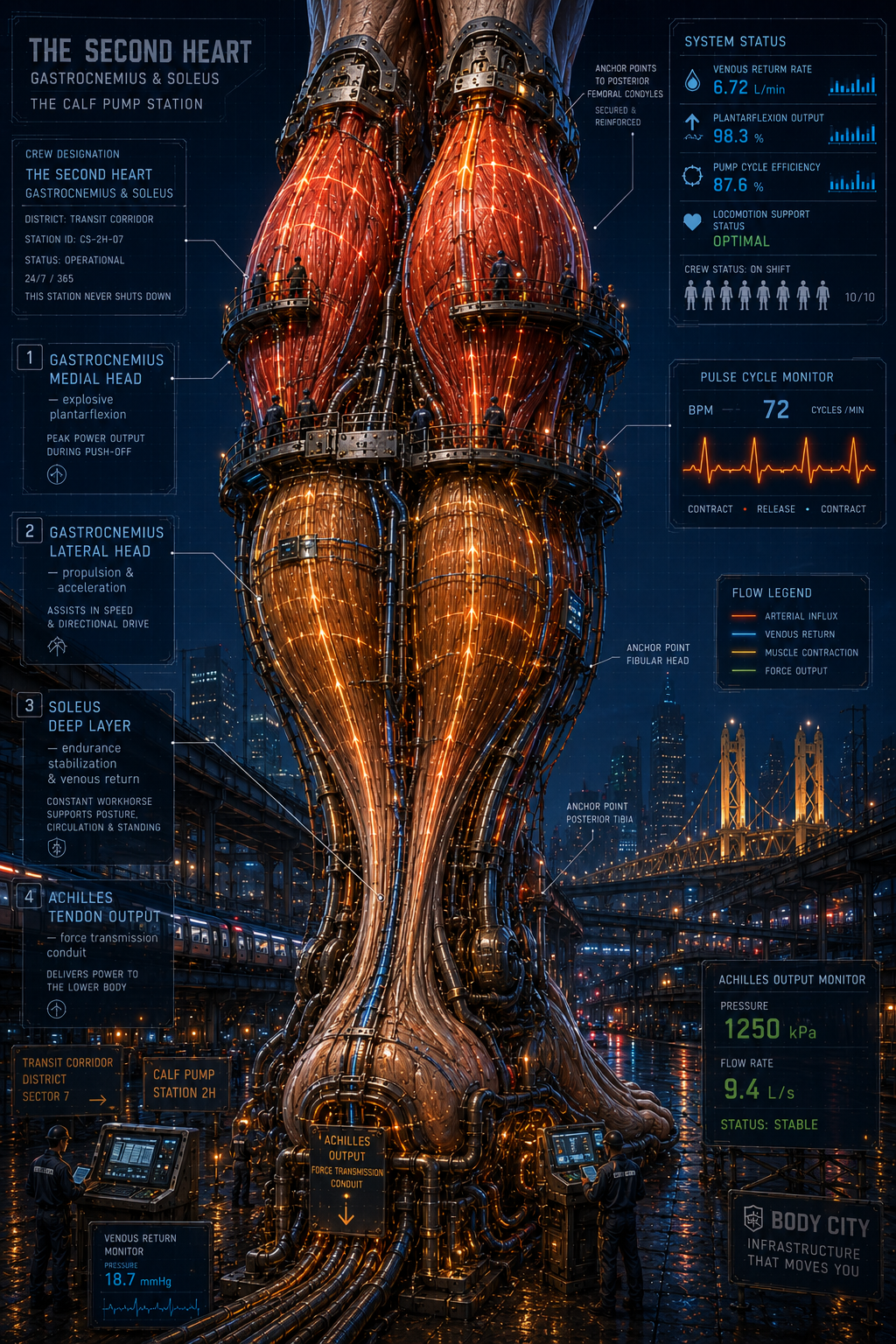
The calf muscles have been called the second heart, and the title is earned. The gastrocnemius and soleus together form a muscular pump at the bottom of the leg that contracts with every step, squeezing blood from the deep veins of the calf back upward toward the heart against gravity. Without this pumping action, blood pools in the lower extremities. Swelling, fatigue, heaviness in the legs, varicose veins — all of these are downstream consequences of a calf pump that isn’t working properly, whether from weakness, shortened range of motion, or the sedentary patterns that have become the default in modern life.
The two muscles have different architecture and different primary roles. The gastrocnemius — the bigger, more visible muscle with its characteristic two-headed shape — crosses both the knee and the ankle. It assists with knee flexion and provides powerful plantar flexion, which is the motion of pushing the foot down and driving the heel off the ground during propulsion. The soleus sits beneath the gastrocnemius and only crosses the ankle. It’s smaller but extraordinarily fatigue-resistant — designed for sustained, continuous work. The soleus is the muscle that keeps you upright when you’re standing still, providing constant postural support against gravity. It also makes the largest contribution to the venous pumping mechanism.
Calf tightness is one of the most common complaints in people who exercise regularly and one of the most commonly mismanaged. The default response is calf stretching — standing heel drops, doorway stretches, foam rolling. These have value, but they don’t address the upstream problem. Tight calves in runners and people who stand a lot are usually tight because the soleus and gastrocnemius are compensating for limited ankle mobility. If the ankle can’t dorsiflex adequately — which requires the calf to lengthen — the body finds ways around the restriction. The knee shoots forward over the foot, or the heel comes up early, or the hip and trunk shift to avoid the ankle range that isn’t available. The calves get tight because they’re always near their maximum length under load, never getting the recovery that adequate range would provide.
Achilles tendinopathy — pain and dysfunction in the thick tendon connecting the calf muscles to the heel — is one of the most common overuse injuries in active people and one of the most stubborn to treat with conventional approaches. The tendon responds poorly to rest and anti-inflammatories because tendinopathy is a degenerative process, not an inflammatory one. What tendons respond to is load — specifically, eccentric and isometric loading that stimulates collagen reorganization and tendon adaptation. Slow, heavy calf raises performed eccentrically are often more effective for Achilles rehabilitation than any passive intervention.
Caring for the second heart means maintaining calf strength and length, addressing ankle mobility restrictions before they produce upstream compensation, and keeping the pump running — literally, through movement, through varied loading, and through not standing in one position for too long without the calf contractions that keep blood moving. The heart at the top of the system does what it does. The second heart at the bottom has to hold up its end of the deal.