Neighborhood 6 — Leg & Foot
The Foundation Crew
Worker 22 — Plantar Fascia & Intrinsic Foot Muscles
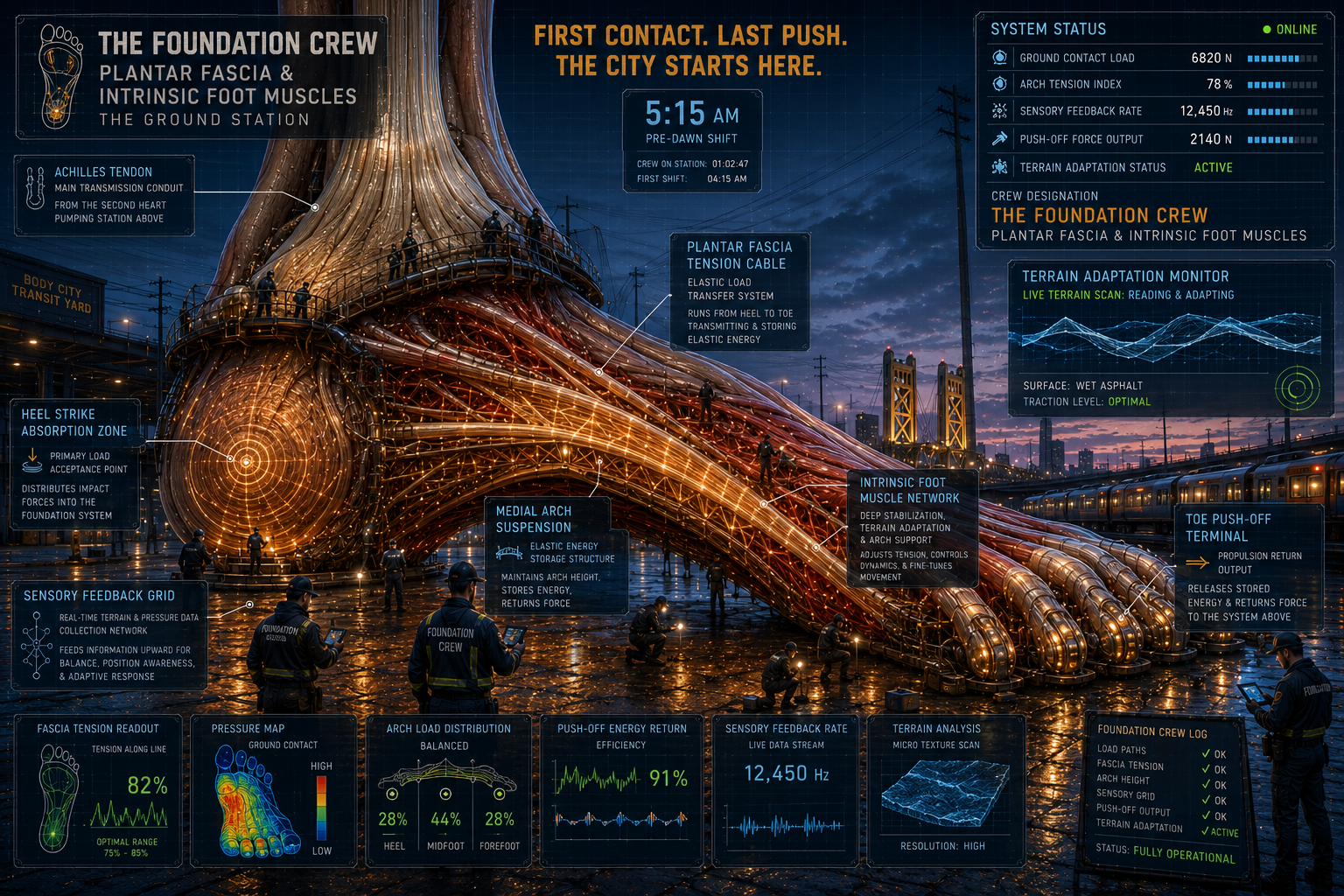
Every building starts with the foundation. Every problem in the foundation sends stress up through every floor above it. The foot is the foundation of the human structure — the part that contacts the ground, absorbs impact, transmits force, and provides the base from which every movement up the chain originates. The plantar fascia and the intrinsic foot muscles are the foundation crew, and they are among the most undertrained and overloaded workers in the entire body.
The plantar fascia is a thick band of connective tissue that runs along the bottom of the foot from the heel bone to the base of the toes, supporting the longitudinal arch and transmitting tensile forces during push-off. It is not a muscle — it cannot actively contract — but it functions as a spring, storing and returning elastic energy with every step. Plantar fasciitis, the painful inflammation of this tissue at its heel attachment, is one of the most common musculoskeletal complaints in adults. The standard presentation is searing heel pain with the first steps of the morning that eases as the tissue warms up, then returns after prolonged standing or activity.
The conventional treatment of plantar fasciitis — rest, anti-inflammatories, orthotics, stretching the calf and plantar fascia — addresses the symptoms but rarely the cause. The plantar fascia becomes overloaded when the structures that should be sharing the load aren’t doing their job. Weak intrinsic foot muscles allow the arch to collapse under load, placing excess tension on the plantar fascia. Tight calves and limited ankle dorsiflexion force the fascia to work at the extreme end of its range with every step. Weak hip abductors and glutes allow the knee to cave and the arch to pronate excessively, loading the medial side of the plantar fascia repetitively and asymmetrically.
The intrinsic foot muscles — the small muscles that live entirely within the foot itself — are the active component of arch support that most orthotics are meant to substitute for. The abductor hallucis, the flexor digitorum brevis, the intrinsic toe extensors and flexors — these muscles create and control the dynamic arch that the plantar fascia passively supports. In a foot that spends most of its time in cushioned, supportive shoes, these muscles atrophy. The foot becomes a passive platform rather than an active base, and the plantar fascia takes on load that the muscles should be sharing.
Rebuilding foot strength is slow work because the muscles are small and rarely taxed in conventional training. Towel curls with the toes, short foot exercises that train the dome of the arch without toe curl, single-leg balance progressions that demand the intrinsic muscles to stabilize — these are the tools. Transitioning to less cushioned, more minimal footwear gradually allows the foot to relearn how to provide its own support. Soft tissue work on the plantar fascia and the calf-Achilles complex addresses the accumulated tension. Hip and core strengthening upstream reduces the excessive pronation force that has been overloading the foundation from above.
Fix the foundation and the whole building becomes more stable. This is true of structures, and it is true of bodies. The foundation crew has been carrying more than its share. Give it the support to do the job it was built for.