Upper Back
Neighborhood
Structural Support · Posture Highways · Scapular Transit
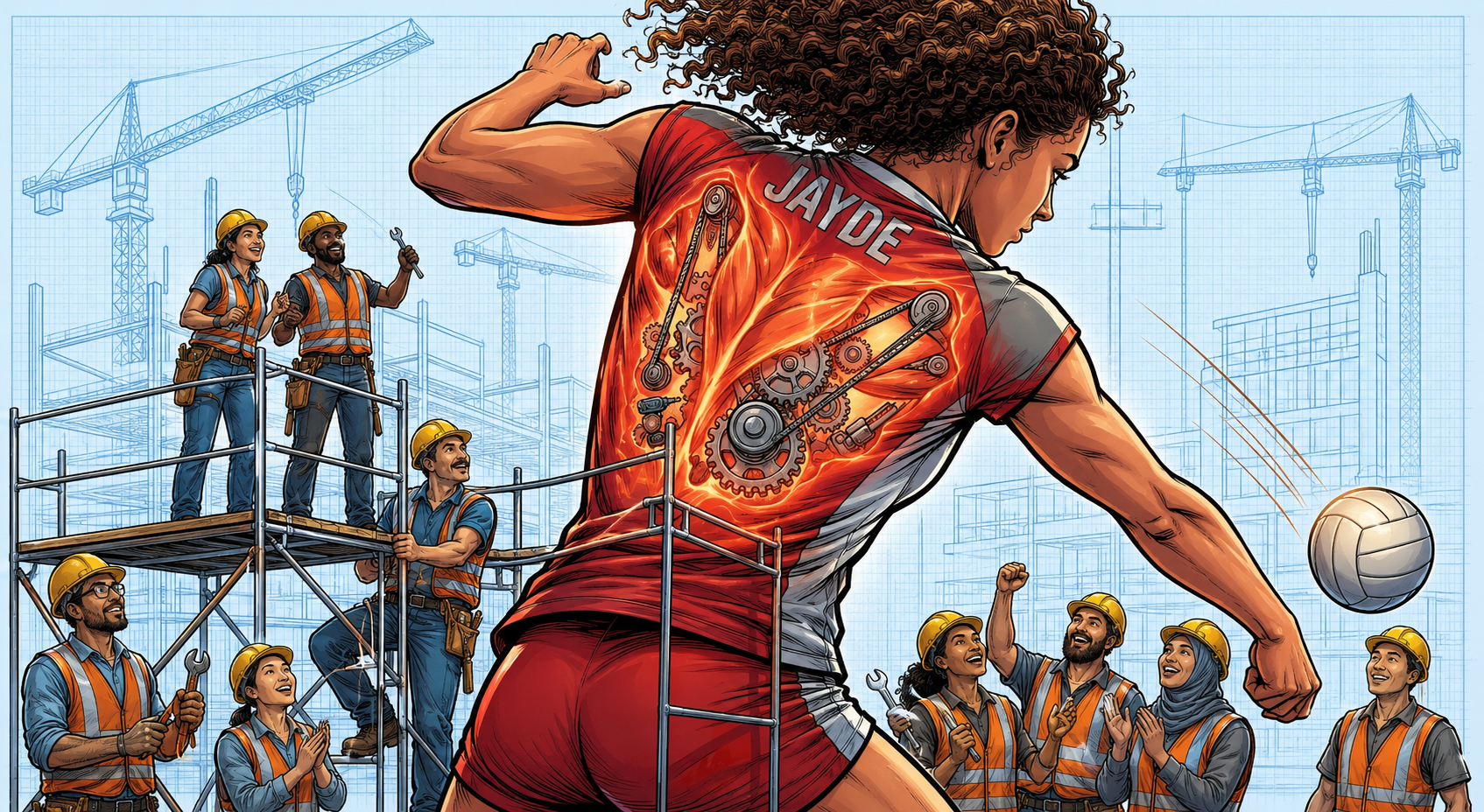
Upper Back is the neighborhood nobody thinks about until something else stops working.
It doesn’t have the reputation of the lower back or the obvious vulnerability of the shoulder. It sits in the middle of the city doing foundational work to resist forward collapse and poor posture. Because it tends to fail quietly—stiffening slowly over years—its structural dysfunction usually causes chronic mid back pain or forces neighboring districts to pay the price.
This is a mistake. Upper Back is where posture is decided. Not maintained — decided. And the difference between those two things shapes everything from how the shoulders move to how the lower back holds up under load.
What This Neighborhood Does
Three systems run out of this district. The first is structural support — the thoracic spine’s ability to extend, rotate, and resist forward collapse. The second is the posture highway, which is a more direct way of saying that the thoracic spine is the vertical scaffolding the rest of the body organizes around. When it rounds forward, everything from the neck down compensates. The third system is Scapular Transit — the movement and positioning of the shoulder blades on the ribcage, which determines what the Shoulder & Arm neighborhood above can actually do.
Where the shoulder blades are positioned determines what the shoulders are capable of. Upper Back decides both.
The Workers
The rhomboids and middle trapezius share the job of pulling the shoulder blades toward the spine and holding them there against the constant forward pull of modern life. Every hour at a keyboard, every forward reach, every slouched posture creates a demand for these workers to resist and recover. When they’re strong and engaged, the shoulder blades sit flat and stable against the ribcage. When they’re underactivated — which is the chronic condition for most desk workers — the blades drift forward and outward, changing the whole mechanical environment for the Shoulder & Arm neighborhood above.
The trapezius is one muscle with three parts doing different jobs. Upper trap elevates and rotates the shoulder blade upward. Lower trap depresses it and rotates it in the opposite direction. Together they create the force couple that allows the shoulder blade to rotate properly during overhead movements — without which the Rotator Utility Crew in the shoulder is working without proper support. Upper trap tends to be chronically overworked and short. Lower trap tends to be chronically underactivated. The imbalance between them is one of the most common structural problems in the entire upper body.
The thoracic erectors extend the mid-spine and resist the forward rounding that pulls the whole upper body into kyphosis. Multifidus works alongside them at a deeper, more segmental level, providing the fine-tuned stability that holds individual vertebrae in relationship with each other. Neither muscle is dramatic. Neither generates the force that moves limbs or lifts objects. They maintain the road the rest of the city drives on, and when they stop doing that job — when the thoracic spine loses its ability to extend and rotate — every neighborhood above and below it has to compensate.
Common Problems
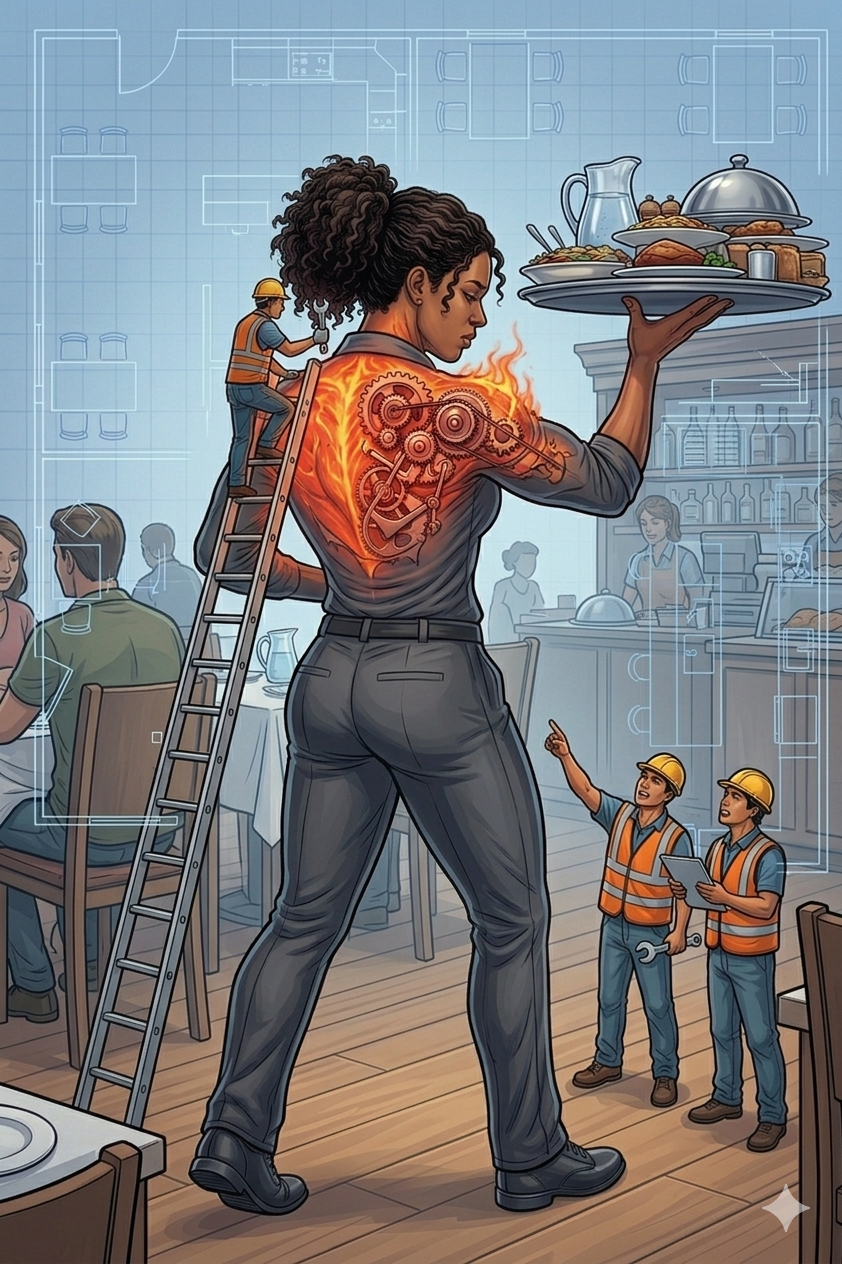
Thoracic stiffness is the calling card of this neighborhood, and it’s more consequential than most people realize. When the mid-back can’t rotate, the lumbar spine compensates. When it can’t extend, the neck hyperextends to get the head upright and the shoulders round forward. The Upper Back neighborhood’s dysfunction is always borrowed by somewhere else.
Rounded shoulders, mid-back aching after prolonged sitting, the sensation of a constant knot between the shoulder blades — these are the standard presentations. Scapular winging, where the shoulder blade lifts away from the ribcage, is a more advanced version of the same problem.
What Happens When Workers Go On Strike
When Upper Back fails, the whole vertical stack reorganizes. The thoracic spine rounds. The head moves forward to keep the eyes level, which loads the Head & Neck neighborhood with compensation work it didn’t sign up for. The shoulder blades lose their anchored position on the ribcage and migrate forward, which means every overhead movement the Shoulder & Arm neighborhood attempts is now happening from a compromised base. Lower back takes on the rotational demands that a stiff thoracic spine can no longer meet.
One neighborhood stiffening quietly over years. Four neighborhoods adjusting around it.
Self-Repair
Thoracic mobility is the priority. Extension over a foam roller, thoracic rotation in a half-kneeling position, quadruped rotation — these are the movements that restore the highway this neighborhood is supposed to maintain. Once mobility is moving in the right direction, lower trapezius activation matters: the ability to set the shoulder blades in the correct position and actually hold them there. This is the work that unlocks the Shoulder & Arm neighborhood above and takes the compensation load off the neck.
Connection to Neighboring Districts
Upper Back sits between Head & Neck above and Lower Back below, and it shares workers with Shoulder & Arm to the front. It is the most connected neighborhood in the city in terms of how many other districts feel its dysfunction directly. A stiff thoracic spine triggers compensation in every direction simultaneously. Getting this neighborhood organized often resolves problems in two or three others without those neighborhoods ever being directly treated.
Neighboring DistrictHead & Neck Neighborhood → Neighboring DistrictShoulder & Arm Neighborhood → Neighboring DistrictLower Back Neighborhood → Return toBody City Overview →