Leg & Foot
Neighborhood
Transportation · Shock Absorption · Ground Connection
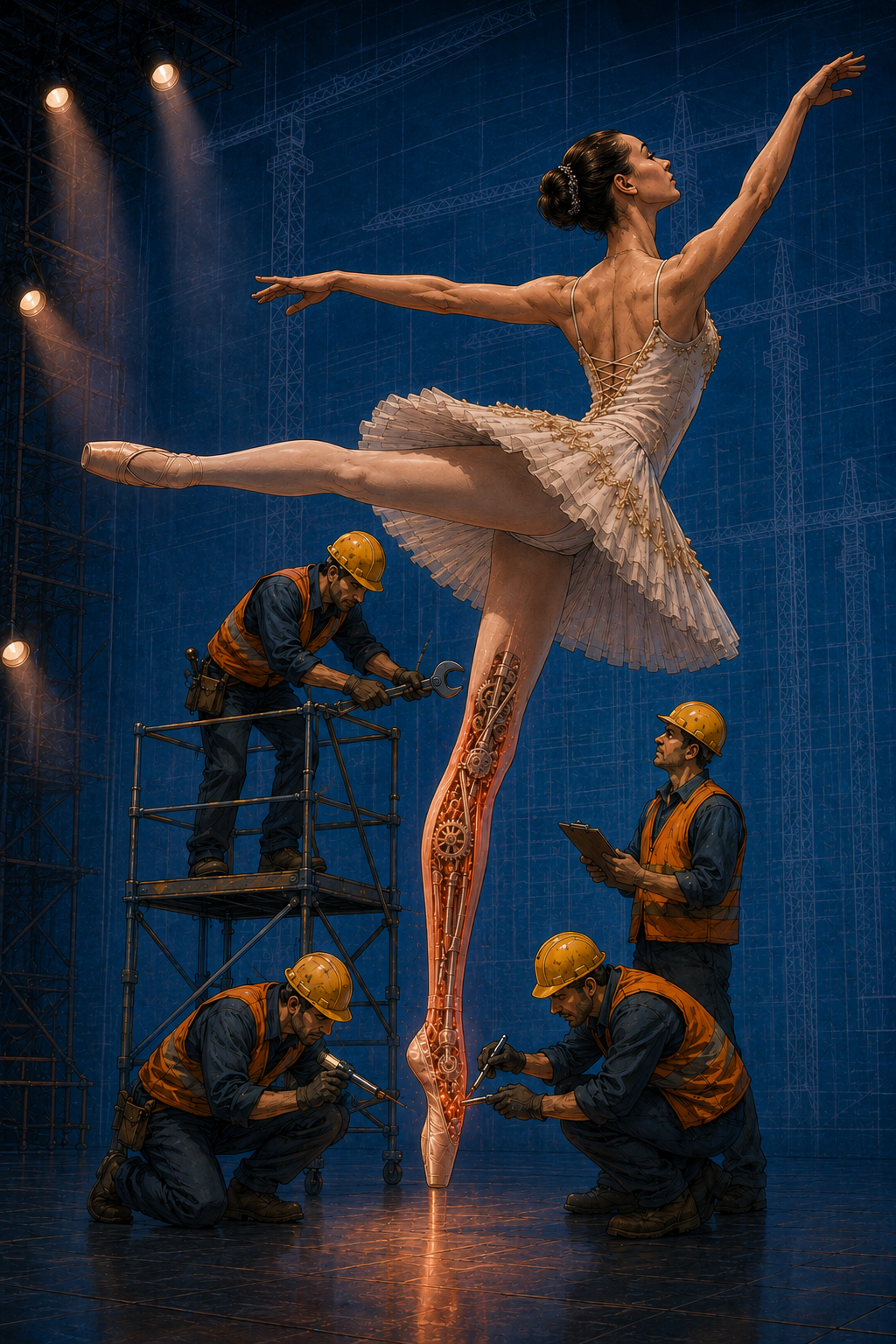
Leg & Foot is the transportation district. Everything that moves through the city eventually comes down here and makes contact with the ground. How that contact is managed determines the level of stress and chronic knee pain every neighborhood above it has to deal with.
Plantar fasciitis is often a hip problem wearing different shoes. The foot gets the diagnosis. The Hip neighborhood sent the bill.
The knee is this neighborhood’s central park. It doesn’t generate force. It doesn’t initiate movement. It sits between the workers above and below it, taking what the hip sends down and what the ankle sends up, trying to manage a loading environment it doesn’t fully control. When the surrounding workers are doing their jobs, the knee handles it fine. When they aren’t, the knee is the place where the problem eventually becomes visible — which is why the knee gets treated so often for problems that started somewhere else.
What This Neighborhood Does
Transportation means moving the body through space in a way that is efficient, absorbs impact, and doesn’t accumulate damage over time. Shock absorption means managing the roughly two to three times body weight of ground reaction force that occurs with every step, and the six to eight times body weight that running produces. Ground connection means maintaining a foot and ankle complex capable of reading the terrain, distributing load across the arch, and providing the stable base the whole city stands on.
The knee doesn’t create the problem. It just lives at the intersection where every upstream failure eventually shows up.
The Workers
Quads and hamstrings are the opposing forces that manage flow through the leg. The quadriceps extend the knee, absorb eccentric load during descent — stairs, squats, landing — and generate the propulsive force for climbing and acceleration. The hamstrings bend the knee, decelerate hip flexion, and are in constant conversation with the Hip district as both a knee flexor and a hip extensor. These two groups check and balance each other in every step, every landing, every direction change. When one group dominates the other — which almost always means overpowered quads and underactivated hamstrings — the knee joint pays the price in uneven loading. The Traffic Controllers work in opposing directions, and both lanes have to be functional for the intersection to run.
The gastrocnemius earns a name no other muscle in the body carries because it earns it. Every step involves the calf muscle contracting against venous blood pooling in the lower leg, squeezing it back upward against gravity toward the heart. Over the course of a day, the gastrocnemius is doing cardiovascular support work that the circulatory system depends on. It also powers the push-off phase of gait, absorbs the initial shock of ground contact, and controls ankle plantarflexion in every movement that involves the foot leaving the ground. The soleus works alongside it in a deeper layer, handling the sustained slow-twitch endurance work while the gastrocnemius handles the explosive contractions. Both are essential. The Second Heart runs continuously, and when it stops working well — through tightness, fatigue, or dehydration — the whole transportation district feels it.
The iliotibial band is not a muscle. It is a thick band of connective tissue running from the outer hip to just below the outer knee, and it cannot be stretched in the conventional sense because it is not designed to lengthen. What it does is maintain lateral stability of the leg under load — preventing the knee from collapsing inward during single-leg stance, running, and descent. The IT band tightens when the TFL overtightens, which happens when the Foreman in the Hip district isn’t doing his job. Rolling the IT band itself addresses nothing upstream. Restoring Hip function does.
Below the ankle, the foot’s foundation crew manages the most direct contact with the ground in the entire city. The plantar fascia — the thick connective tissue running the length of the foot’s underside — maintains the arch, absorbs load, and stores elastic energy that gets returned in the push-off phase of gait. The intrinsic foot muscles, though small enough that most people couldn’t name them, control toe movement, maintain dynamic arch height, and provide the sensory feedback the whole transportation system relies on to calibrate its response to terrain. When the Foundation Crew is weak or overloaded, the arch collapses under force, the plantar fascia takes more load than it was designed for, and the pain that follows gets diagnosed as a foot problem that is often, in reality, a calf tightness problem, a hip problem, or both.
Common Problems
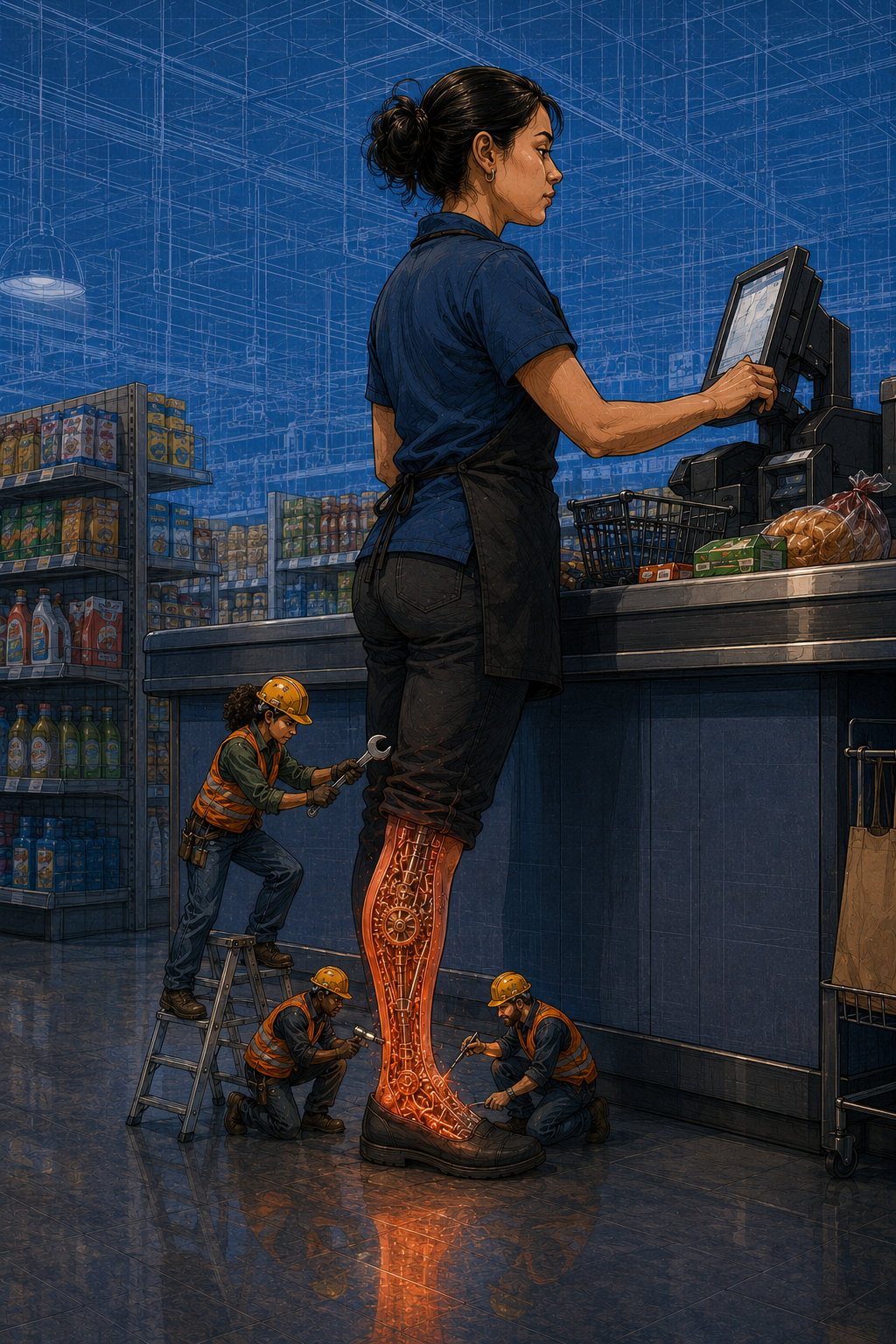
Knee pain in this neighborhood rarely originates at the knee. Patellofemoral syndrome — the aching beneath the kneecap — is almost always a hip rotation control problem. IT band syndrome is a hip abductor and glute problem. Patellar tendinopathy develops when quadriceps load management fails. The knee is present at all of these scenes. It is rarely the cause.
Plantar fasciitis is the foot’s version of the same pattern. The fascia is taking more load than it should because the calf is tight, the intrinsic muscles are weak, or the hip isn’t controlling the mechanics of the foot strike. Achilles tendinopathy follows similar logic. Ankle instability often traces back to hip weakness that leaves the lower leg without proper rotational support from above.
What Happens When Workers Go On Strike
When Leg & Foot breaks down, the ground connection fails and the shock absorption system stops working at full capacity. Impact that should be absorbed and distributed instead travels upward. The knee begins loading asymmetrically. The hip compensates for ankle instability by changing how the leg is positioned during stance. The lower back absorbs impact that the leg should have managed. The whole city feels the vibration of a transportation district that has stopped doing its job from the ground up.
Self-Repair
Calf work — both stretching and loaded strengthening through eccentric heel drops — is foundational for this neighborhood. Single-leg balance work rebuilds the coordination between the ankle, knee, and hip that keeps the foot strike organized. Foot intrinsic strengthening, done through towel curls, single-leg balance on uneven surfaces, or simply spending more time barefoot on varied terrain, restores the Foundation Crew’s ability to do its job. Hip work matters here as much as anywhere — because the traffic that flows through Leg & Foot is determined by what the Hip sends down.
Connection to Neighboring Districts
Leg & Foot answers directly to the Hip neighborhood. What Hip does with rotation, pelvic tilt, and femoral positioning determines how the knee tracks, how the ankle loads, and where the foot strikes the ground. The conversation goes in both directions every step: hip sends force down, foot sends ground reaction force back up, and the neighborhood in between manages the exchange. Restore Hip function and this neighborhood typically improves without being treated directly. Ignore Hip and treat the foot indefinitely and the problem will keep coming back.
Neighboring DistrictHip Neighborhood → Return toBody City Overview →